 Presented By The Webbys

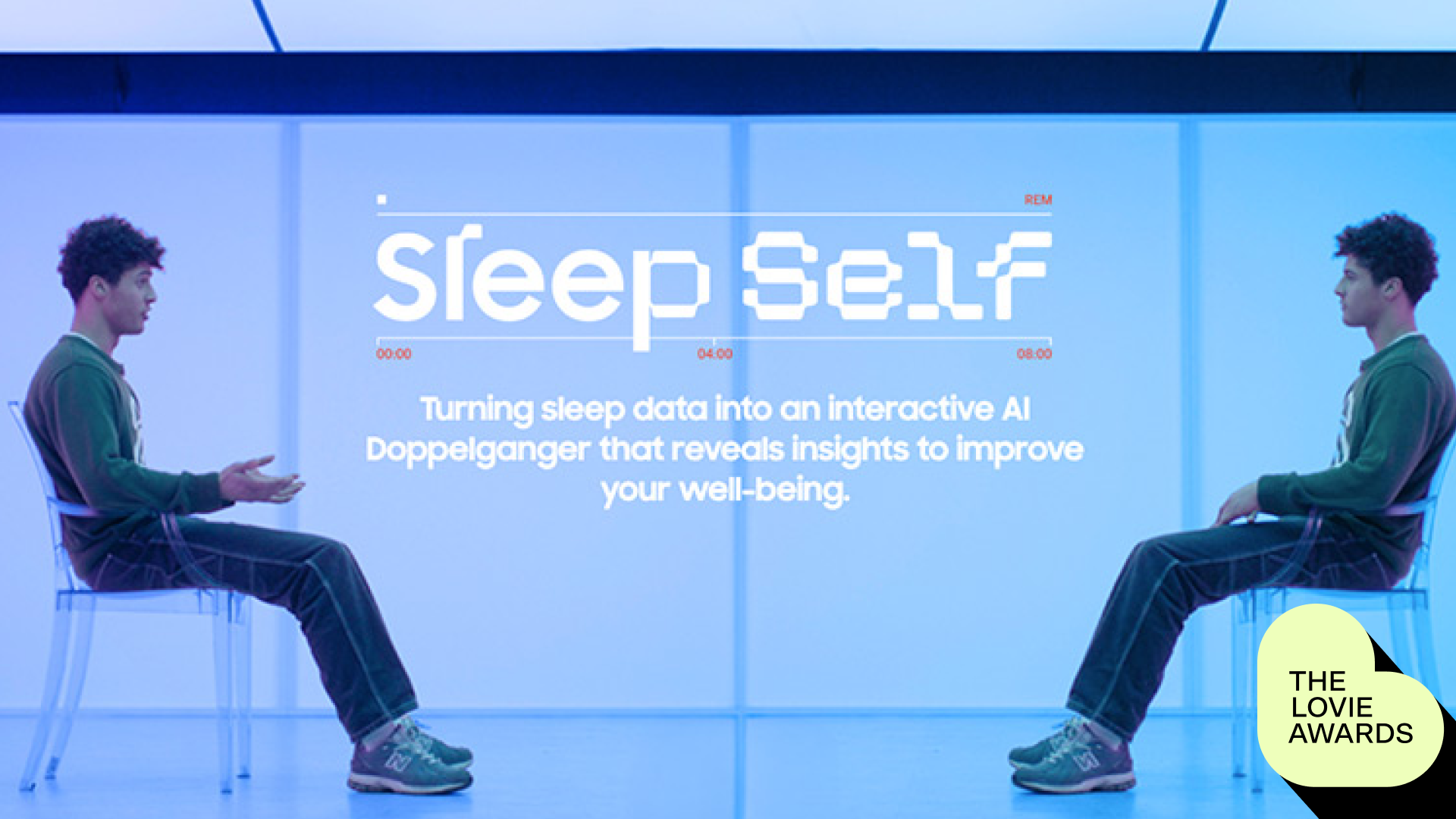
When Cheil Germany set out to launch Samsung’s Galaxy Ring in Germany, the team knew a traditional product campaign wouldn’t be enough. Instead, they created Sleep Self, an AI-powered experience that transformed sleep data into a conversation with yourself.
We spoke with Executive Creative Director Arnab Biswas about the project’s origins, the challenges of building with AI before today’s tools existed, and why the most valuable creative work still feels unmistakably human.
Every standout project has an origin story. What sparked Sleep Self?
It began with the launch of the Galaxy Ring in Germany. While Samsung’s headquarters provided global campaign assets, we also wanted to create something specifically for the local market.
The insight itself was surprisingly simple: we spend a third of our lives asleep, yet most people know very little about it. Sleep data usually appears as a chart that nobody looks at twice.The breakthrough came when we asked ourselves: What if your sleep could talk back to you? The moment that idea landed, everyone in the room knew we had something worth exploring.
Was there a breakthrough or risk that shaped the project’s success?
There were several. The biggest challenge was timing. We started nearly two years ago, before many of today’s AI tools existed, so we had to build much of it ourselves. Six months into development, new technologies emerged that could have made parts of the process much easier, but by then we’d already learned so much from creating it ourselves.
The other major challenge was making the AI sound human. We didn’t want it to speak like a wellness coach or a chatbot. We wanted participants to feel as though they were genuinely having a conversation with another version of themselves. We spent weeks refining how it spoke. If it felt robotic or artificial, the entire experience would fall apart. That decision made the experience feel personal rather than clinical, and ultimately became one of the project’s biggest breakthroughs.
What’s one lesson you’ll carry into future projects?
Data means nothing until it’s personal. The moment we stopped treating sleep as numbers and started treating it as a conversation, everything changed. That’s a lesson I’ll carry into every future brief.
Your team has won multiple Lovies over the years. How has that recognition influenced your work?
The Lovies are particularly special to us. We’ve even been named Agency of the Year in the past. Winning has given the team confidence to back unusual ideas. We took a chance on something unconventional, and the Lovies proved that betting on the unexpected can pay off. Internally, it’s also made it easier to argue for stranger ideas before they’re polished into something safer. That’s the real reward.
What advice would you give someone entering The Lovie Awards?
Enter the piece you’re slightly nervous about. Safe work rarely stands out, and judges can spot conviction from a distance. Submit the idea that felt risky in the room, not the one that felt comfortable.
How does working in Germany influence your creative approach?
Germany has a healthy tension between engineering precision and human warmth. You can’t rely on a beautiful interface alone. The technology has to work, solve a genuine problem, and have substance. People are naturally sceptical, so gimmicks don’t last very long. Stakeholders expect every detail to be considered. You can’t simply wing it. That focus on meaningful work shapes every project, regardless of the industry.
What shifts in technology and internet culture are you watching most closely?
When anyone can generate almost anything with AI, proof of human craftsmanship becomes incredibly valuable. ‘A real person made this’ stops being a disclaimer and becomes the point of difference. You can already see brands leaning into work that feels more human, more imperfect and more authentic. But it’s not about deliberately adding typos or rough edges. Authenticity has to exist from the very beginning.
AI can produce something that looks right, but humans instinctively know when something doesn’t feel real. That remains one of the most important differences between machine-generated work and genuinely creative thinking.
Enter The Lovie Awards to Earn Industry Exposure
You have one last chance to enter the 16th Annual Lovie Awards and show your work to our expert panel of industry luminaries. Submit your digital products and projects before the Extended Entry Deadline on 7 August, 2026.
Explore expanded AI & Innovation categories recognising AI Experiences & Applications across Creative Tools, Storytelling, Entertainment & Media, and Healthcare & Life Sciences, alongside new honours including Best AI Agent, Technical Achievement, User Experience, Product or Service, Real-Time Engagement, Responsible AI and more.