 Presented By The Webbys

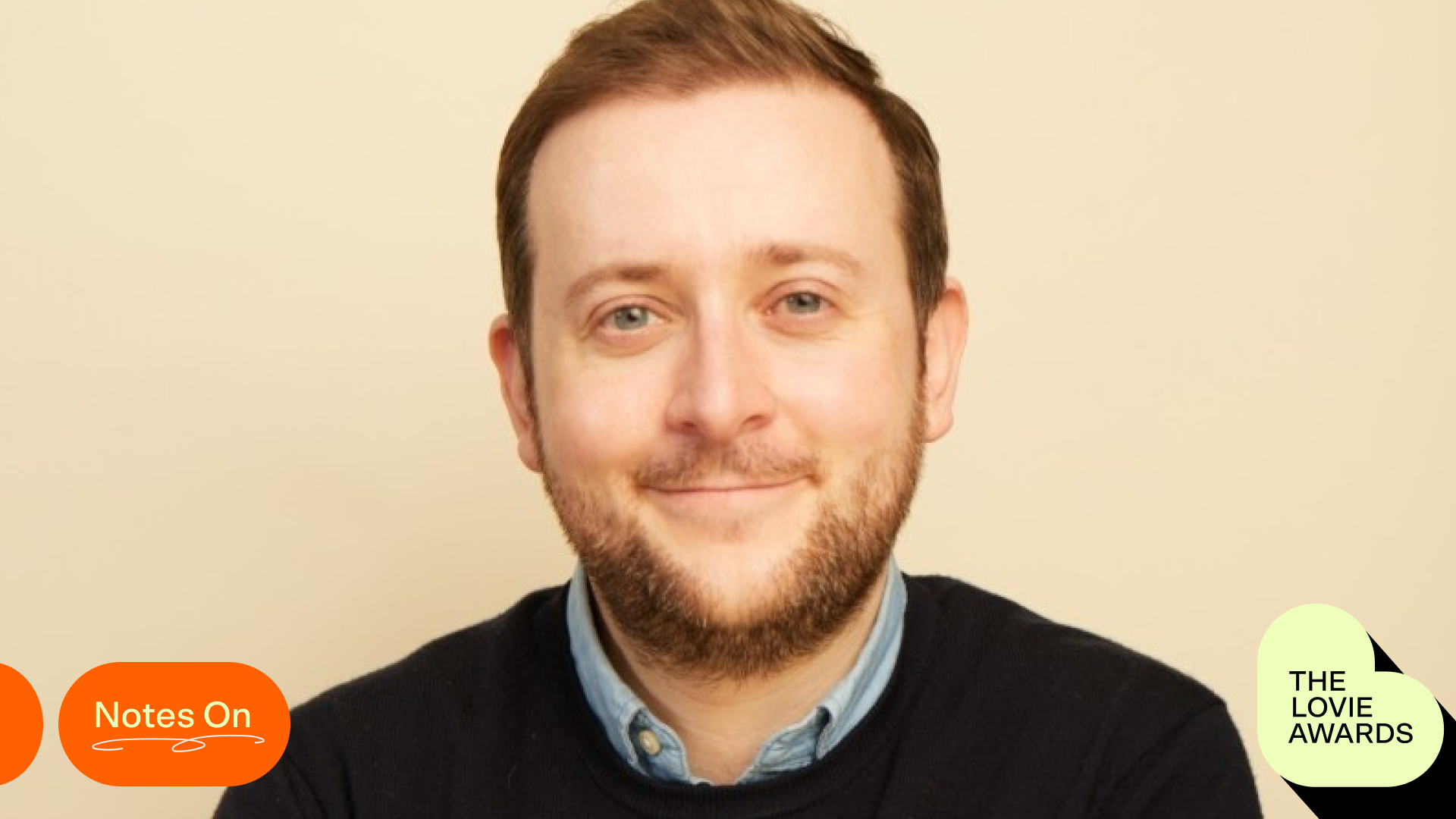
Thomas Walters didn’t set out to build one of the world’s leading creator marketing agencies. But more than a decade after spotting the earliest signs of YouTube’s cultural rise, the Co-Founder and Chief Innovation Officer of Billion Dollar Boy now finds himself at the centre of one of the Internet’s most significant shifts: the move from a TV-first world to a social-first one.
Since launching Billion Dollar Boy in 2014 alongside co-founder Ed East, Walters has helped shape how brands think about creators, influence, and online culture. What began as an early bet on YouTube creators has evolved into a global agency working across creator ecosystems, brand strategy, and emerging technology. Along the way, Walters has remained focused on a larger question: what does meaningful creativity look like in an Internet era increasingly shaped by platforms, algorithms, and now AI?
In this edition of Notes On, Walters reflects on building Billion Dollar Boy from the ground up, why the company chose to go all-in on creators before much of the industry caught up, and why he sees AI not as a threat to creativity, but as a tool that can expand it when used with genuine intention. He also shares his thoughts on organisational change, the future of creator-led marketing, and the advice he would give to anyone at the beginning of their career.
How did you get started in your field, and what drew you to it?
Billion Dollar Boy was founded in 2014. My co-founder Ed and I had both come from film and television. We were working in a film business together, Ed based in LA, me in London. We started seeing YouTubers gain real significance and build real audiences, and we began using them to promote the movies our company was producing at the time. We saw a real opportunity there.
At the time, multi-channel networks were prevalent: Maker Studios, rights management businesses like Zefr. We tried to emulate that model within the film business and, for various reasons, couldn’t make it work. But we had the opportunity to take our YouTube contract out of the business and set something up on our own. We were young and decided it was a risk worth taking. That’s how Billion Dollar Boy got started.
We did have a rights management arm early on, which was the money spinner at the time since brand deals with creators weren’t as prevalent yet. But we made the decision to sell that side of the business in 2016 and refocus entirely on what we saw as the greater opportunity: the convergence of the creator economy and entertainment. We’ve been focused on that ever since.
What are you working on or thinking about right now that excites you?
We’re moving rapidly from a TV-first world to a social-first world, and that shift is creating a remarkable amount of opportunity for creative people.
We had research released by the IPA at the end of last year showing that influencer marketing has a higher long-term effect than television, which is remarkable. We know linear has collapsed. For years, people have clung to the legacy outcome data. Now we have proof that creators are capable of delivering even more. I think there’s a lot of change on the horizon from a brand communication perspective, and from where we sit, it’s an optimistic and exciting future for creative people.
On the agency side, we help brands navigate that landscape by building creative ecosystems with creators ranging from 10,000 followers to A-list celebrities. We deliberately chose not to represent talent, because early on we realized that representing talent meant proposing people for work they weren’t right for simply because they were our talent. Our job is to suggest the right creator for the right work.
We also have a venture called FiveTwoNine, which is a professional community for creators who’ve built some success and are looking to take the next step, but don’t necessarily have access to professional services or peer networks that you’d get through more traditional industry structures. We run real-life events sponsored by professional services partners and brands who genuinely want to engage with creators in a more meaningful way. What’s been remarkable is that there are a lot of brands that want to give back and speak directly with creators in those rooms. We’re working with the likes of Microsoft and Adobe, who want to gather real insight from those conversations to update their products and marketing. They understand that creators who talk authentically about a brand are the ones who’ll grow with them.
As soon as you get a brand in the room with creators, something shifts. You could be telling a client the exact same thing as a strategist, but the moment they hear it directly from a creator, something clicks. The light bulb switches on, and that’s where the real magic happens.
How are you thinking about AI in the creator space?
We see AI very much as a creative opportunity. Creator marketing and social advertising are more resilient spaces than some others because, at its core, creator is still about human-to-human, peer-to-peer connection. In that environment, generative AI is additive rather than a replacement.
We’ve run tests with AI creators: people who are at the bleeding edge, experimenting with these tools to produce brand advertising. Where you might have previously seen someone create a product shot that gets zero organic engagement, you now have an AI creator taking that same product shot, interpreting it through their own creative vision, and producing something genuinely differentiated. The results have been phenomenally better. We’ve seen that with the likes of Loewe, Burberry, and Versace.
But intention matters enormously, and it’s a real and significant part of how audiences receive the work. There’s a filmmaker called Dave Clark who’s been making AI short films focused on underrepresented stories, including a Black brigade that stormed the beaches of Normandy, a story that should be told but that the economics of traditional filmmaking make incredibly hard to produce. He’s doing it from his bedroom because he believes these stories deserve to exist. Now imagine a studio making the exact same film. The perception would be completely different, because the intention reads as efficiency rather than purpose. Audiences feel that difference.
Our view is that the meaningful use of AI is to enhance human creativity, not replace it. Using it purely to cut costs, without genuine creative intention, is not only a missed opportunity. It’s perceived that way too.
What’s the hardest or most important lesson you’ve learned recently?
Getting people inside an organization to embrace change is genuinely hard work, even when you’ve already done the thinking and you can see clearly where things are going.
We’ve been working on a new brand positioning at Billion Dollar Boy, and that process has really brought this into focus for me. The industry is going through enormous transformation, and while there’s a lot of opportunity in that, bringing everyone along on the ride and getting people singing from the same hymn sheet takes real effort. When you’re in a role focused on business strategy and innovation, you spend a lot of time looking far out, and when you’re looking that far ahead, you have to construct a narrative that brings it to life for people who aren’t standing where you are yet.
It’s easy to forget that once you’ve worked through something yourself. You can fall into the trap of thinking, “I’ve already processed this, why is it difficult for everyone else?” But it takes time, and it requires meeting people where they are. There’s a technology adoption curve for a reason: first movers, fast followers, and those who take longer to come around. In any organization there’s a mix of all of those, and balancing them while keeping momentum is the real work. Explaining things from multiple angles, bringing people along at their own pace: that’s just part of leading a people-centric business. It’s worth the investment.
What’s something in your space that’s underrated or overhyped?
I think the amount of brands who are ready for a social-first, creator-led world is overhyped. There’s still a significant gap between where the data is pointing and how brand investment is actually shifting. A lot of organizations are clinging to old frameworks even as the evidence mounts.
What’s underrated is the creative potential of this moment. More creative people, talking about more brand messages, reaching more people in more authentic ways: that’s a genuinely exciting proposition. The infrastructure to support that is still being built, but the direction of travel is clear.
What advice would you give to someone earlier in their career?
Three things: be decisive, build resilience, and remember that it’s just business.
Those are the things I’d tell my younger self. The world of work can feel enormously high stakes, especially when you’re earlier in your career. But decisions need to be made, setbacks will happen, and keeping perspective on all of it makes everything more manageable.
As the creator economy continues to evolve, Walters remains focused less on hype cycles and more on the long-term cultural shift taking place underneath them. For him, the future of creativity is not about replacing human expression with technology, but about building new systems, communities, and tools that allow more people to participate in it meaningfully.
At a moment when brands are still learning how to operate in a creator-led world, Walters believes the organisations willing to embrace authenticity, creative experimentation, and human connection will be the ones that shape what comes next online
Submit Your Best Work to Set the Benchmark for Digital Excellence in Europe.
If you are creating great work online, this is the moment to benchmark it. Explore the new and expanded Social and Creator categories and measure your work against Europe’s leading voices. Enter before the Final Entry Deadline on Friday, 26 June.