 Presented By The Webbys

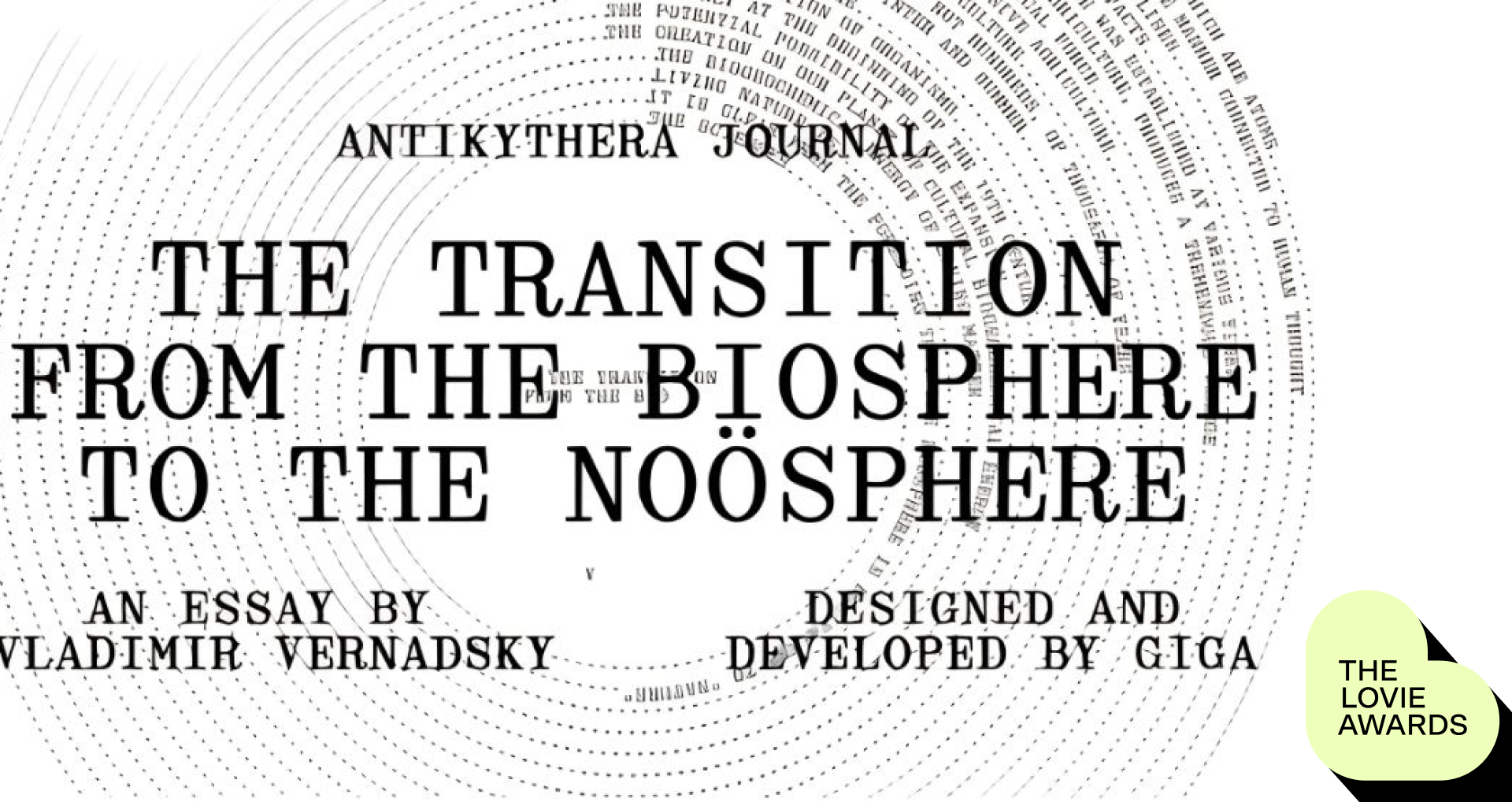
When Giga Design Studio was invited to create an interactive experience for Noösphere, a philosophical essay published by the Berggruen Institute’s Antikythera think tank, the team knew they couldn’t simply design another website. They needed to transform a century-old text into an experience people could explore intuitively.
We spoke with Creative Director Gabriele Donini about the project’s origins, why functionality always comes before aesthetics, and how Italy’s design heritage continues to shape the studio’s approach to digital creativity.
Every standout project has an origin story. What sparked Noösphere?
Benjamin Bratton approached us while launching the Journal of Antikythera, a think tank within the Berggruen Institute focused on the philosophy of technology. They asked us to develop an interactive storytelling experience for one of the articles in their journal.
The text itself was written more than 100 years ago, and it’s actually very complex. Sometimes it felt difficult to read. Our challenge became finding a way to transform it into something people could experience, rather than simply read.
Was there a breakthrough or risk that shaped the project’s success?
I think the main thing was finding one very simple idea. The project revolves around a circular visual element that also works as the website’s navigation. It represents the transition between the biosphere and the noosphere, while unfolding as people move through the article.
The other thing that really helped us was starting with a prototype. Building an interactive version from the beginning allowed us to understand whether the idea was visually strong enough and whether it was actually conveying what we wanted.When you’re dealing with a technological system, you have to focus on functionality first. If you don’t solve that, you’re kind of lost. Once that works, you can push the creativity much further.
What’s one lesson you’ll carry into future projects?
I think this project reinforced that you can find a simple idea, even when there’s a lot of complexity behind it. You need time for creativity and experimentation at the beginning, but once the direction is clear, execution becomes the biggest challenge. You have to take care of so many small details and be incredibly attentive throughout the process.
Your team has won multiple Lovies over the years. How has that recognition influenced your work?
It’s always a great honour to have your work recognised internationally. But one of the best things about The Lovies is being surrounded by studios doing incredible work. For me, it’s not really about the competition. It’s about connecting with other studios, speaking with them, and becoming part of that community. That’s one of the most valuable parts of the experience.
What advice would you give someone entering The Lovie Awards?
Really understand the strength of your work and where it fits best. If you understand your work and can tell its story, it’s much easier to place it in the right category. At the same time, submit the work you believe in the most. That’s the most important thing.
How does working in Italy influence your creative approach?
Italy isn’t especially known for technology, but we do have a very strong design culture. We grew up with the masters of design, and I think that stays with you. Whether it’s furniture, architecture or product design, they were always thinking about what would happen once their work entered the world. That way of thinking carries into how we approach digital experiences today.
What shifts in technology and internet culture are you watching most closely?
As a studio, we’re very interested in the relationship between culture and technology. We have an ongoing project called Discourse, where we speak with people across design, technology, architecture and fashion about how those worlds interact. On another note, I wouldn’t be honest if I were not mentioning AI. That’s something we’re watching closely, it is obviously changing everything. Right now, we’re flooded with slop and a lot of AI-generated work looks the same. But I think we’re moving into another era, one where people will use it in much more sophisticated ways. The next phase will be about understanding the technology more deeply and making it part of your own creative process.
Enter The Lovie Awards to Earn Industry Exposure
You have one last chance to enter the 16th Annual Lovie Awards and show your work to our expert panel of industry luminaries. Submit your digital products and projects before the Extended Entry Deadline on 7 August, 2026.