 Presented By The Webbys

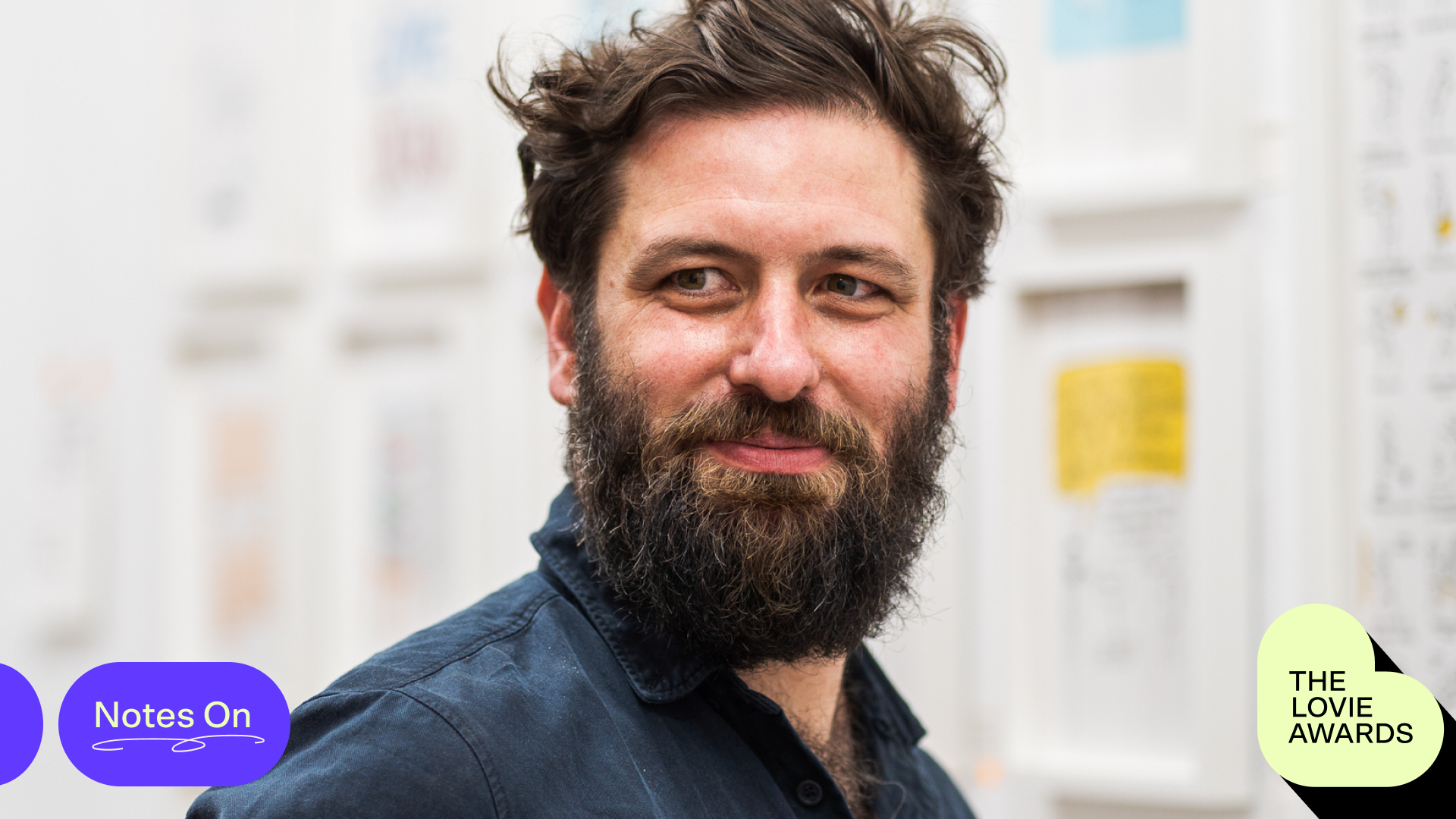
More than a decade ago, Chaz Hutton started sharing simple cartoons drawn on Post-it Notes. Built around the small frustrations, awkward moments and quiet humour of everyday life, those sketches quickly struck a chord with audiences around the world. Today, the Australian-born, UK-based illustrator behind @instachaaz has built a community of more than 250,000 followers, published A Sticky Note Guide to Life, collaborated with global brands, and seen his work featured in publications including The New Yorker.
As the final guest in this season of Lovie Letters, Hutton joined us to reflect on building a creative career without chasing trends, finding inspiration in ordinary moments, and why, despite the rise of AI, authenticity and human connection remain a creator’s greatest strengths.
Your cartoons are built around everyday observations. When did you realise they were resonating beyond your own circle?
It happened surprisingly quickly. Friends kept telling me to put my Post-it Note drawings online, and for a long time I thought it was a terrible idea. Then I finally did it, and my Instagram went from about 6,000 followers to 60,000 in a week. That was the moment I realised these little observations weren’t just mine. I always assumed they were very niche jokes, but it turns out everyone has the same thoughts. That’s what surprised me most.
What’s been the key to building a creative career that has lasted more than a decade?
Early on, consistency was really important. I made sure I posted every day for the first year or two. Now I don’t worry about that so much. If something genuinely feels funny, I’ll put it out there.
The same goes for brand collaborations. I think attitudes have changed a lot over the last ten years. People understand that if creators are getting paid, it gives them more time to keep making the work they love. Most of the brands I work with already feel like a natural fit, and sometimes I’ll even reach out to smaller brands I genuinely like. That’s always been more important than chasing the biggest opportunity.
Where do your ideas come from?
It usually starts with a simple observation and then finding a visual way to express it. A thought about sitting in traffic might become sardines packed into a tin. Then suddenly you’ve got a bouncer standing at the front telling the other sardines they’re full. The original idea is just the starting point.
When I first started, working in an office gave me endless material. Now I have to create little exercises for myself. I’ll ask people to send me one word and then challenge myself to build a comic around it. It forces you into places you probably wouldn’t have gone otherwise.
What’s the best creative advice you’ve ever received?
David Bowie once said, “Never play to the gallery.” I’ve always loved that because every time I’ve tried to guess what people want, I’ve usually got it wrong.
I’ve made comics that other people have told me were too complicated or too wordy, and they’ve ended up performing really well. I’d much rather make something I genuinely find funny than spend my time chasing what I think the algorithm wants.
How do you think creators should approach AI?
AI is getting remarkably good, and that’s a little unsettling. But the biggest advantage humans still have is collaboration. Sitting down with someone, talking through ideas, having a laugh and figuring things out together is something AI can’t really replace.
If someone chooses to work with a person instead of a machine, that conversation and creative back-and-forth becomes part of the value. That’s something I don’t think we’ll lose.
What do you wish you’d known when you first started?
I’ve never really liked calling creative work “content”. It makes it sound like fuel for a machine rather than something people have actually made.
The internet has changed a lot over the years, but I still think it’s at its best when it’s about finding communities, collaborating with other creators and helping people discover each other’s work. That’s much more rewarding than constantly trying to feed the algorithm, and it’s still what makes creating online worthwhile.
Submit Your Best Work to Set the Benchmark for Digital Excellence in Europe.
If you are creating great work online, this is the moment to benchmark it. Explore the new and expanded Social and Creator categories and measure your work against Europe’s leading voices. Enter before the Extended Entry Deadline on Friday, 7 August.